



Photovoltaic and wind system on a sailboat
EcoSolaris Project: Installation of a complete photovoltaic and wind system on a sailboat - energy autonomy, safety and efficiency at sea
About the project
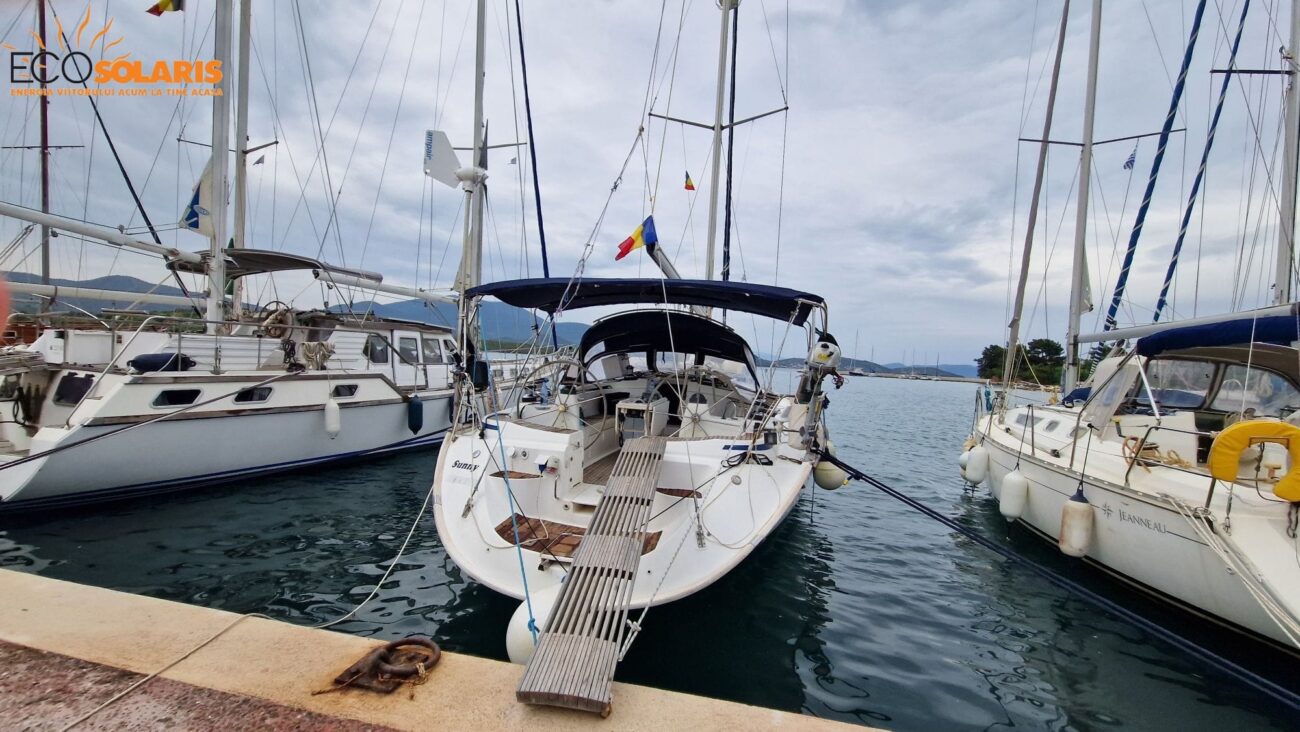
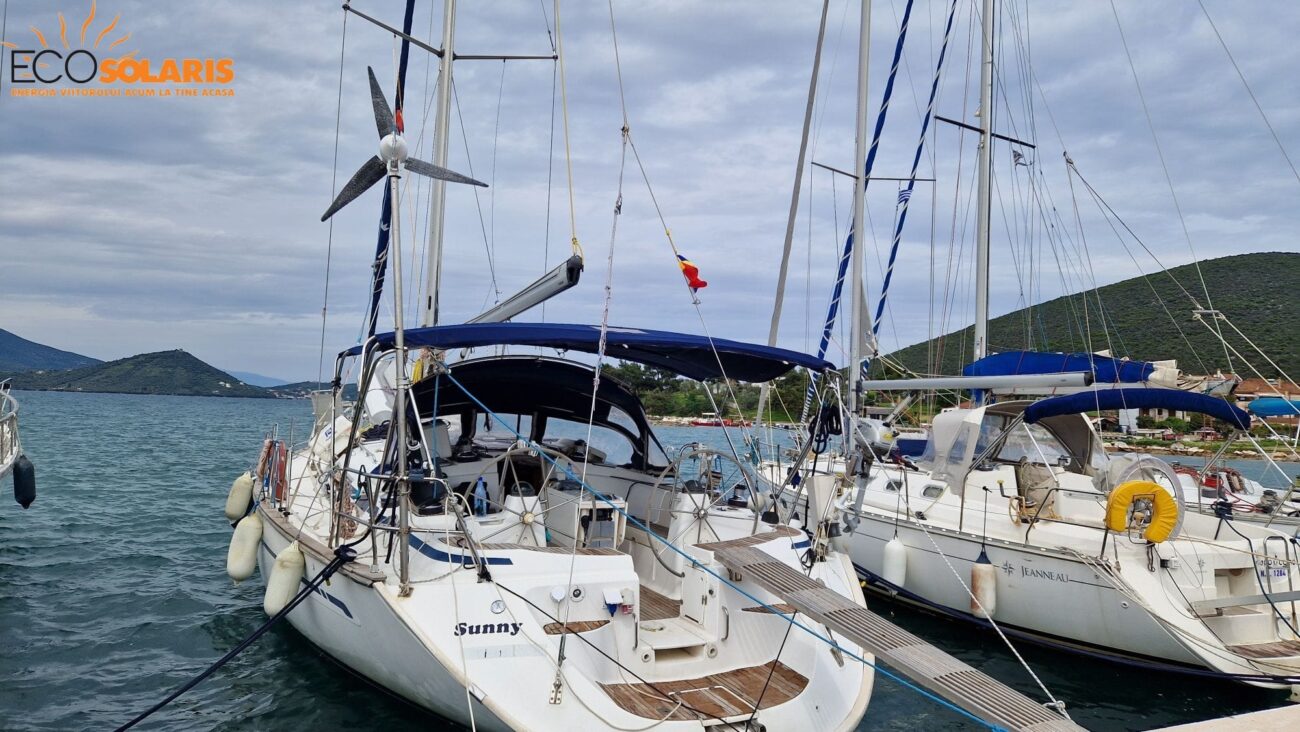
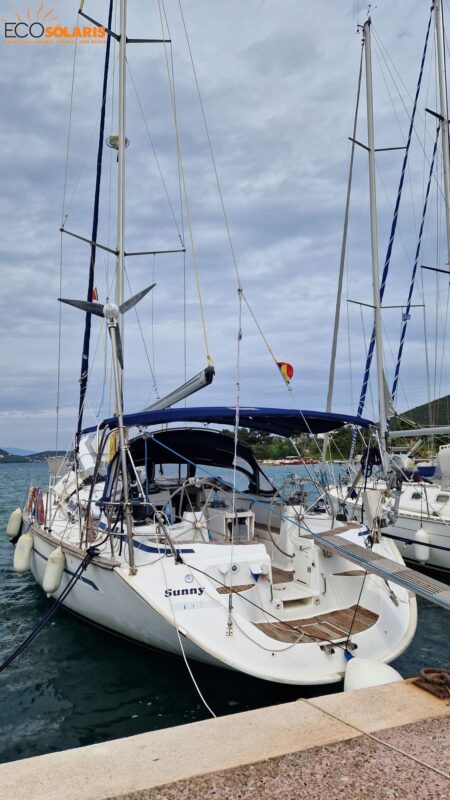
Modern sailing involves not only seamanship, but also constant access to electricity. In a new project successfully completed, the team EcoSolaris installed a complete photovoltaic system, in combination with an offshore wind turbine, on a sailboat intended for long-duration sailing, with the aim of ensuring total energy autonomy, without dependence on conventional sources.
By integrating high-performance components, resistant to the difficult conditions of the marine environment, we have offered the client a reliable, efficient and sustainable solution, perfectly adapted to the needs of life on the water.
The objective of the project
The sailboat had to be completely energy self-sufficient, even in low sun conditions or prolonged offshore sailing. The installed system ensures uninterrupted operation of all equipment on board, without worries about fuel consumption or shore connection.
Electrical and electronic equipment on board a sailing ship
A modern sailboat is equipped with multiple systems that require constant power:
1. Navigation and Communications
- GPS and plotter
- Radar, AIS, autopilot
- VHF radio station
- Marine router (4G/satellite)
2. Safety and control
- Automatic bilge pump
- Gas and smoke detectors
- Navigational lighting
- Surveillance camera
3. Comfort on board
- Marine refrigerator
- Indoor/outdoor lighting
- Fans / ventilation
- USB chargers / 220V
4. Auxiliary equipment
- Inverter
- Audio systems
- Electric / sonar fishing equipment
- Desalination systems (optional)
This set of consumers can generate a daily energy requirement of up to 150 Ah, which justifies the integration of a complete and reliable energy production and storage system.
The hybrid solution proposed by Ecosolaris
To ensure energy continuity in all weather conditions, we installed a solar-wind hybrid system, composed of:
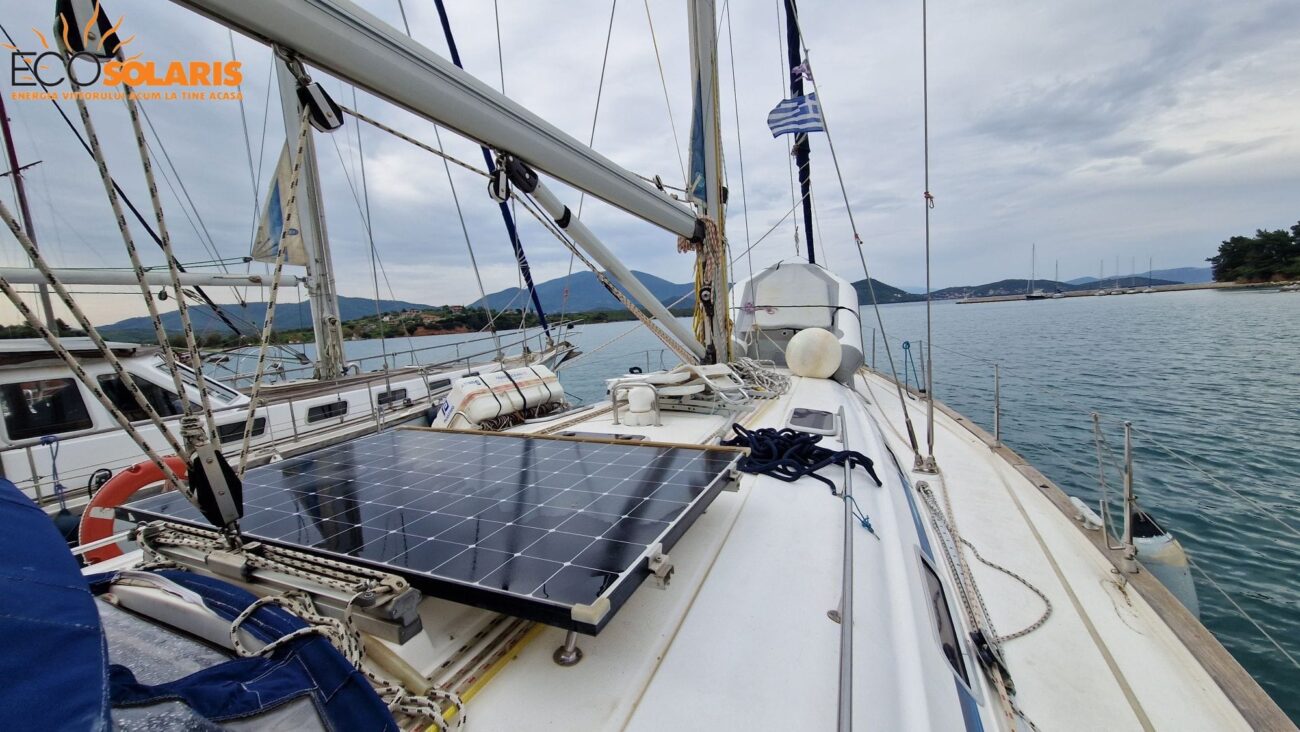
- Monocrystalline SunPower photovoltaic panel
Superior performance even in low light conditions, ideal for limited space on the deck of a sailboat. - Marine wind turbine
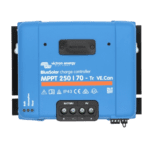
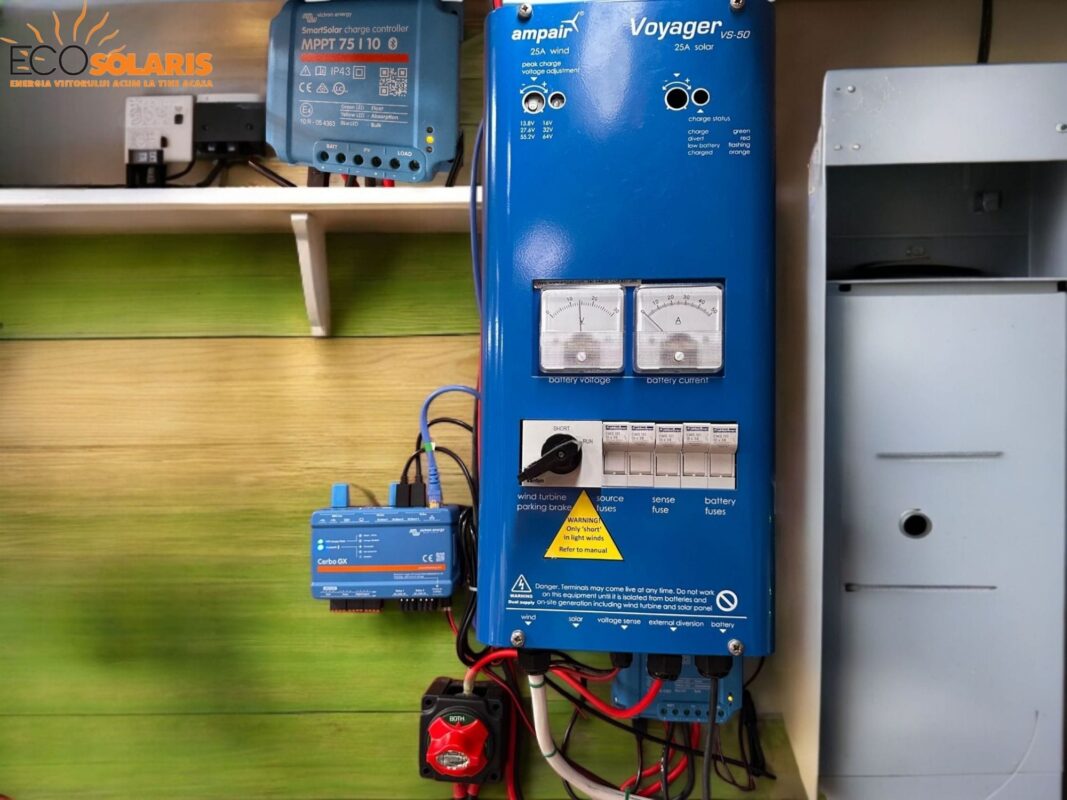
Silent turbine with blades optimized for sea breezes. Produces constant power while sailing or at night when the panel is not generating current. - Victron Energy SmartSolar MPPT 75/10
Solar charge regulator, which optimizes the capture of energy from the panel. - Dedicated load controller for the turbine
It controls and stabilizes the energy produced by the turbine, protecting the batteries against overvoltage. - Victron Energy inverter
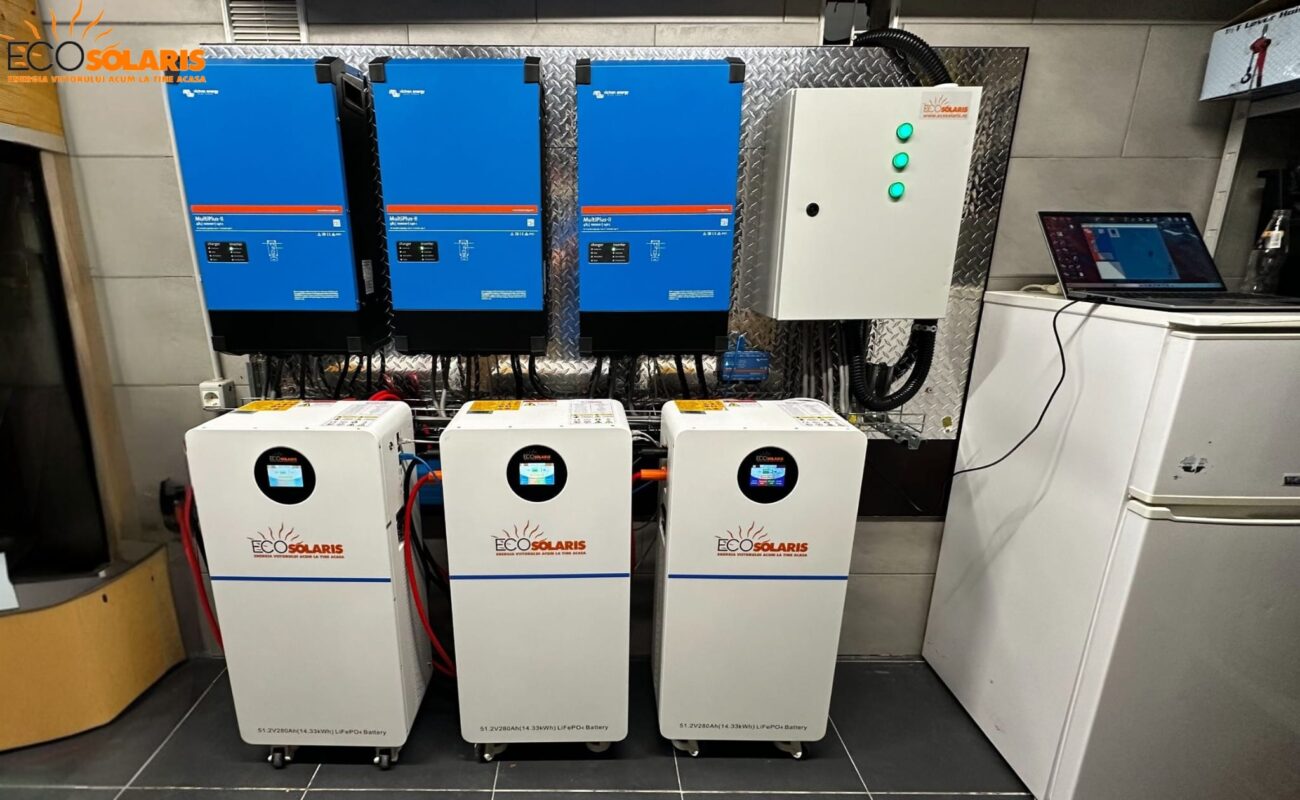
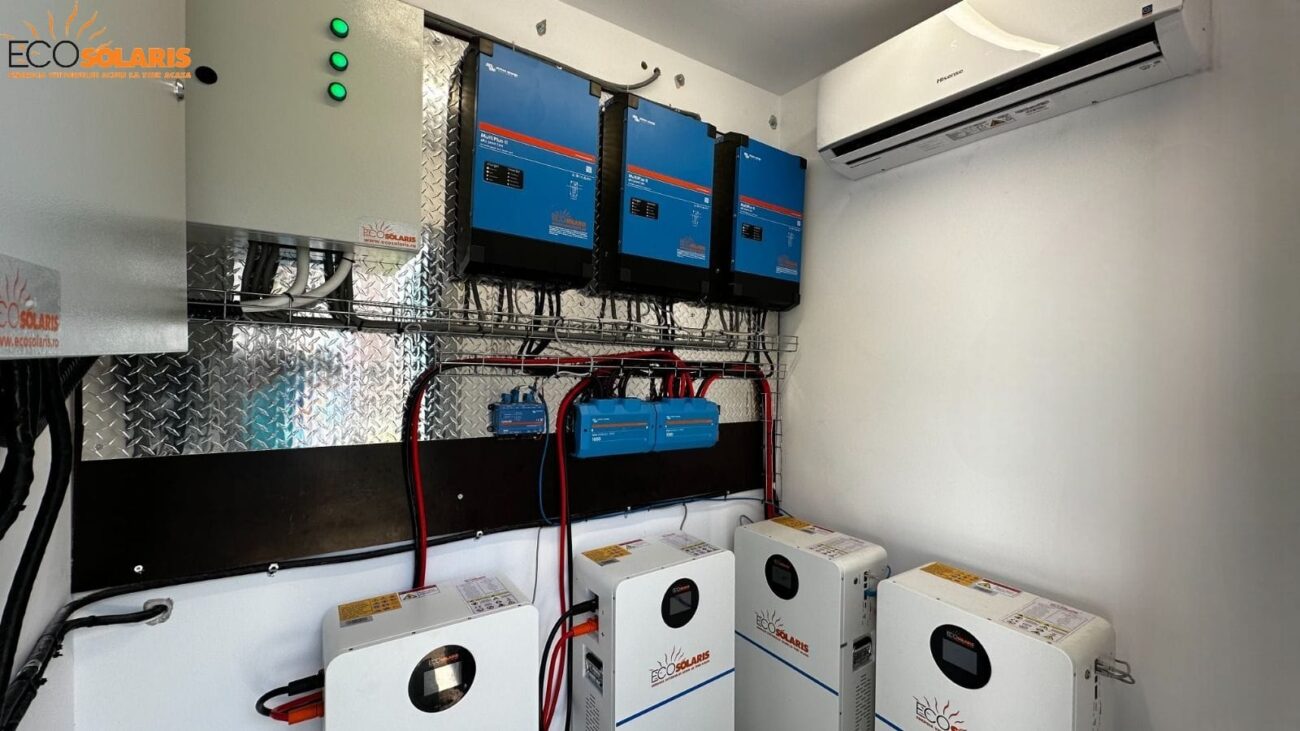
Converts energy stored in batteries into voltage, ideal for household appliances and on-board equipment. - Cerbo GX Victron Energy – control and monitoring unit
It allows local and remote access to all energy consumption, production and storage data. - SmartShunt Victron Energy
Smart battery monitor that provides accurate data on charge level, consumption and estimated range. - 4 deep-cycle batteries
Configure for optimal capacity, adapted to the estimated consumption of the sailboat. - Automatic transfer switch
Allows seamless switching between sources (panel, turbine, shore network or auxiliary generator). [#$$#]
- RuuviTag environmental sensor
An essential component for on-board environmental control, the RuuviTag is a high-precision wireless sensor that monitors in real-time:
- Ambient temperature, for the comfort of the crew and the protection of sensitive equipment;
- Relative humidity, with a role in preventing condensation, moisture and degradation of the installation;
- Atmospheric pressure, providing clues about impending weather changes.
All this data is available through the mobile application Ruuvi Station, allowing the crew to take preventive action and optimize living conditions on board.
Project stages
1. Evaluation of consumption
We carried out a detailed analysis of the estimated daily consumption according to the electrical equipment constantly used on board, in order to properly size the production and storage capacity.
2. Mounting the panel and the turbine
The solar panel was installed in an area with maximum exposure to the sun, and the wind turbine was positioned at the stern, on the dedicated mast, to benefit from constant air flows. We used anti-vibration mounts and corrosion-resistant fasteners.
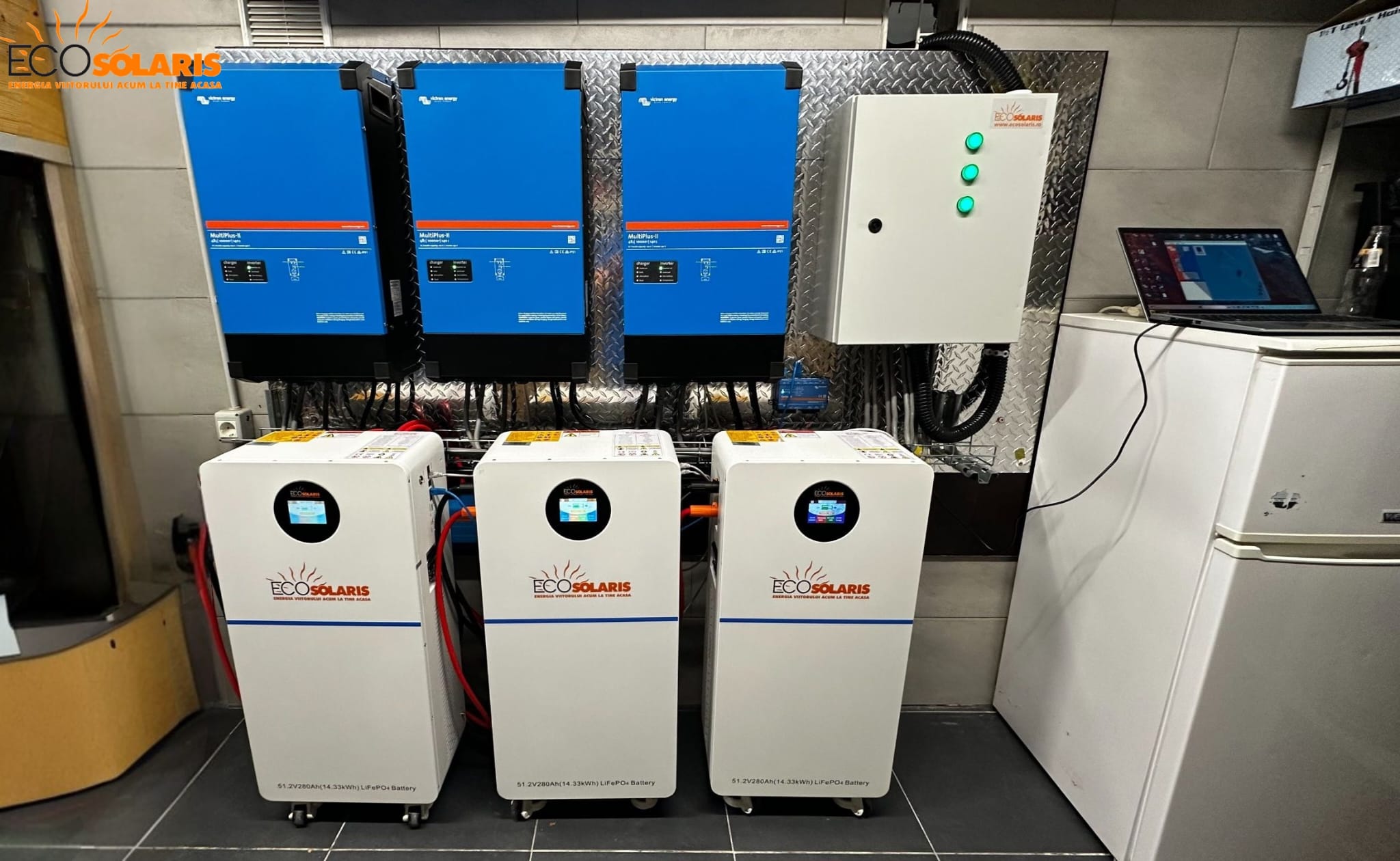
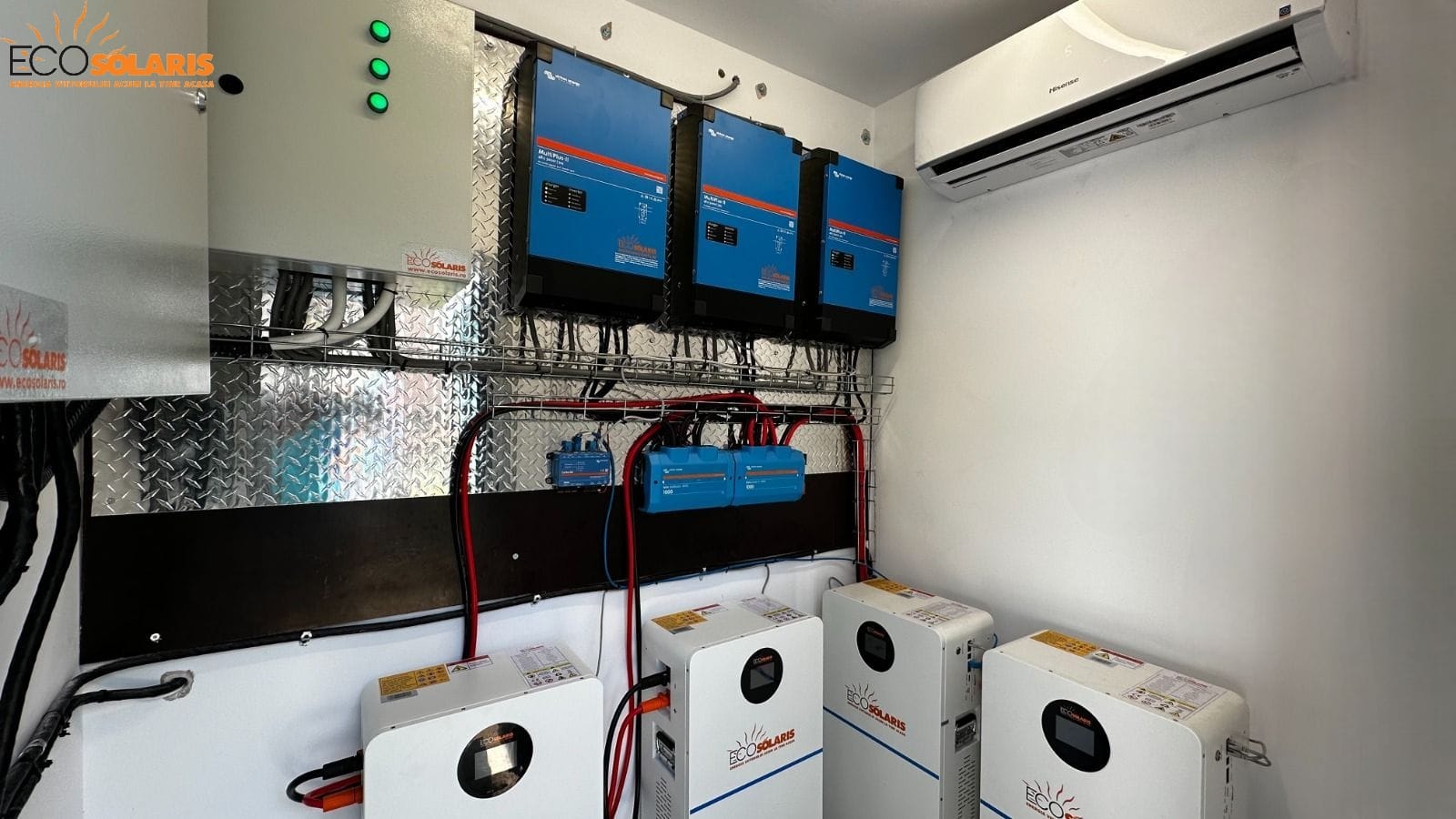
3. Integration of Victron equipment
SmartSolar MPPT, Cerbo GX and SmartShunt were installed in a protected compartment. The system allows full monitoring of the energy flow, being connected to all sources (solar, wind, batteries).
4. Turbine controller configuration
We installed a specific load controller for the wind turbine, which protects the system from overload and optimizes the energy distribution in the batteries.
5. Testing, calibration and commissioning
The system has been tested under real sailing conditions, validating power supply stability and power generation efficiency both day and night.
Monitoring and maintenance
Through the platform Victron VRM, the user can access the system from anywhere, monitoring in real time:
- Solar and wind production
- Battery status
- Total consumption and by category
- Personalized alarms and notifications
Maintenance consists of periodically cleaning the panel, inspecting the turbine blades and checking the connections.
The benefits of the solar-wind hybrid system
✔ Full energy autonomy even in the absence of sun
✔ Production 24/24 – during the day from the panel, at night or on the wind from the turbine
✔ High efficiency and zero fuel costs
✔ Zero noise and emissions, ideal for ecological environments
✔ Full monitoring and remote control
✔ Durability in the marine environment – all components are certified for nautical use
Conclusion
Through this project, EcoSolaris reaffirms its expertise in renewable energy solutions for nautical applications. The solar-wind hybrid system installed on the sailboat offers the customer safety, comfort and independence at sea, regardless of weather conditions.