



In a world in constant change, renewable energy is gaining more and more ground, and photovoltaic systems are becoming a popular solution for electricity production. An essential element in their efficiency are batteries, which influence overall performance, long-term costs and energy independence.
Choosing the right batteries depends on factors such as storage capacity, durability, cost and climatic conditions. It is important to understand how different types of batteries work in order to make an informed choice that maximizes the benefits of the PV system and supports the sustainable use of energy resources.
The specifications that we must take into account when choosing batteries in the photovoltaic system
The choice of batteries in the photovoltaic system is a complex process, influenced by a number of technical specifications and operational factors. To ensure optimal performance and system longevity, it is essential to carefully evaluate each specification. Here are the main criteria we have to take into account:
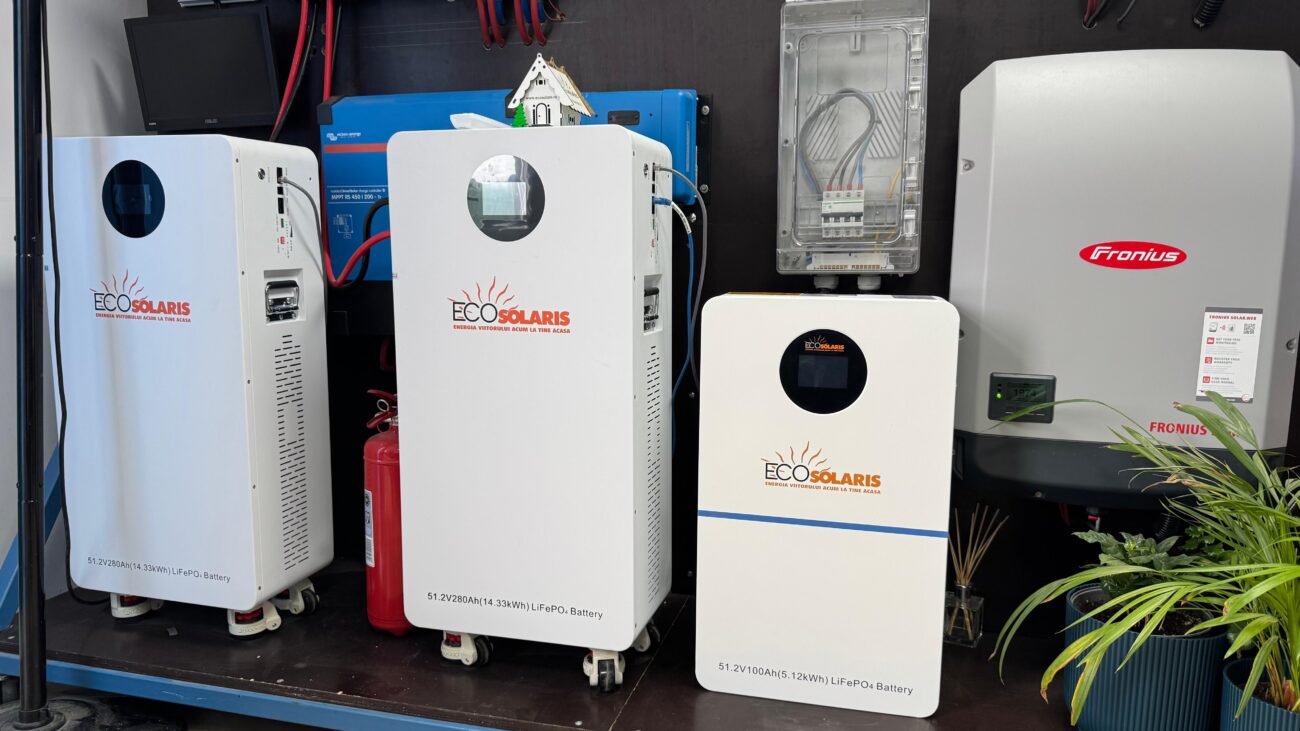
- Storage capacity (Ah or kWh): This refers to the amount of energy a battery can store. The required capacity depends on the daily energy consumption and the length of the desired autonomy periods. Choosing batteries with a suitable capacity ensures that the photovoltaic system can provide energy even on days with little insolation.
- Lifetime (charge/discharge cycles): Batteries undergo a limited number of charge and discharge cycles before they begin to lose efficiency. Lifetime is crucial for determining long-term costs. Longer-life batteries typically involve higher initial investment, but offer long-term savings.
- Energy efficiency: Efficiency refers to the percentage of energy that can be recovered from the battery compared to the energy stored. Choosing batteries with high efficiency contributes to reducing energy losses and optimizing the performance of the photovoltaic system.
- Depth of Discharge (DoD): This specifies the percentage of energy that can be extracted from the battery without compromising its life. For example, a battery with a DoD of 80% allows the use of 80% of its rated capacity before requiring recharging. It is essential to choose batteries with a suitable DoD to maximize the utility of energy storage.
- Loading and unloading time: The time required to fully charge and discharge the battery affects the operational efficiency of the system. Choosing batteries with fast charge and discharge times can be advantageous in conditions of rapidly varying insolation.
- Operating temperature: Battery performance and life are affected by ambient temperature. It is important to choose batteries that operate efficiently over a wide range of temperatures, depending on the specific climate of the PV system location.
- Total cost (TCO – Total Cost of Ownership): In addition to the initial purchase cost, we also need to consider maintenance and replacement costs over the life of the battery. Choosing batteries with a low TCO can provide significant long-term savings.
- Compatibility with other system components [#$$#]: The batteries must be compatible with the inverter and other equipment in the photovoltaic system. It is essential to ensure that all components work harmoniously to avoid technical problems and loss of efficiency.
- Safety and reliability: Battery safety is crucial. It is important to choose batteries with advanced protection technologies against overcharging, overheating and short circuit. Battery reliability ensures uninterrupted operation and reduces the risk of costly breakdowns.
- The impact on the environment: The choice of ecological batteries, with a low impact on the environment, contributes to the overall sustainability of the photovoltaic system. Recyclable batteries and those made from non-toxic materials are preferable to minimize environmental impact.
By considering these specifications, we can make an informed and efficient choice of batteries in the PV system, thus ensuring optimal performance and long-term sustainability.
The choice of batteries and their usefulness in different types of photovoltaic systems
Batteries play an essential role in certain types of photovoltaic systems, providing energy storage for later use. Choosing the right batteries can significantly improve the efficiency and reliability of these systems. Batteries are mainly used in off-grid, hybrid and micro-grid systems, each with distinct specificities and advantages.
Off-grid photovoltaic systems
Off-grid systems operate completely independently of the electrical grid, being ideal for isolated locations or for users who want to be completely autonomous from an energy point of view. In these systems, batteries are essential because they store energy generated during the day for use at night or on days with little insolation. Choosing the right batteries in the off-grid PV system is crucial to ensure a constant and reliable power supply. Without batteries, these systems would not be able to function during times when the solar panels do not produce enough energy.
Hybrid photovoltaic systems
Hybrid systems combine the advantages of on-grid and off-grid systems. They are connected to the mains, but can also operate independently in the event of a mains power failure. Batteries in hybrid PV systems play a dual role: they store excess energy produced by solar panels and provide power during power outages. Choosing the right batteries in hybrid systems is important to maximize energy efficiency and ensure continuity of power supply. These systems are ideal for users who want to reduce grid dependency but also have a backup power source.
Micro-grid photovoltaic systems
Micro-grid systems work similarly to hybrid systems, but involve the use of several different brands of inverters, one on-grid and one off-grid. They are generally used in more complex applications, such as small communities or commercial buildings that want to optimize energy consumption and have a reliable backup power source. Batteries in micro-grid photovoltaic systems are essential for energy storage and efficient management of energy flows between different sources and consumers. Choosing the right batteries in these systems ensures optimal power management and reduces dependence on the mains.
Why are batteries useful in these systems?
- Continuity of supply [#$$#]: Batteries provide a constant source of energy, even in the absence of sunlight or in the event of power outages. This is essential for users who cannot tolerate power interruptions.
- Energy autonomy: Especially for off-grid systems, batteries are crucial to achieve complete energy independence. They allow the storage of surplus energy for later use.
- Energy efficiency: Batteries make it possible to store excess energy produced during the day, which would otherwise be wasted, and use it at times of peak demand or when production is low.
- Flexibility and versatility: In hybrid and micro-grid systems, batteries provide the flexibility to switch between solar power sources and the main grid, thus ensuring a more efficient and economical use of available energy resources.
Conclusion
The choice of batteries in the PV system is essential to ensure optimal performance and long-term durability. In off-grid, hybrid and micro-grid systems, batteries are critical components that allow energy to be stored and used when solar production is insufficient. Evaluating specifications such as storage capacity, lifetime, energy efficiency and depth of discharge is vital to making an informed choice. Batteries contribute to the continuity of supply, energy autonomy and operational efficiency of photovoltaic systems. In conclusion, to obtain the maximum benefits from a photovoltaic system, the choice of batteries must be made carefully, taking into account the specific needs of each type of system.