



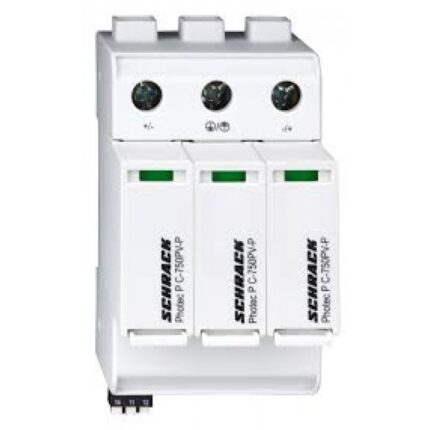
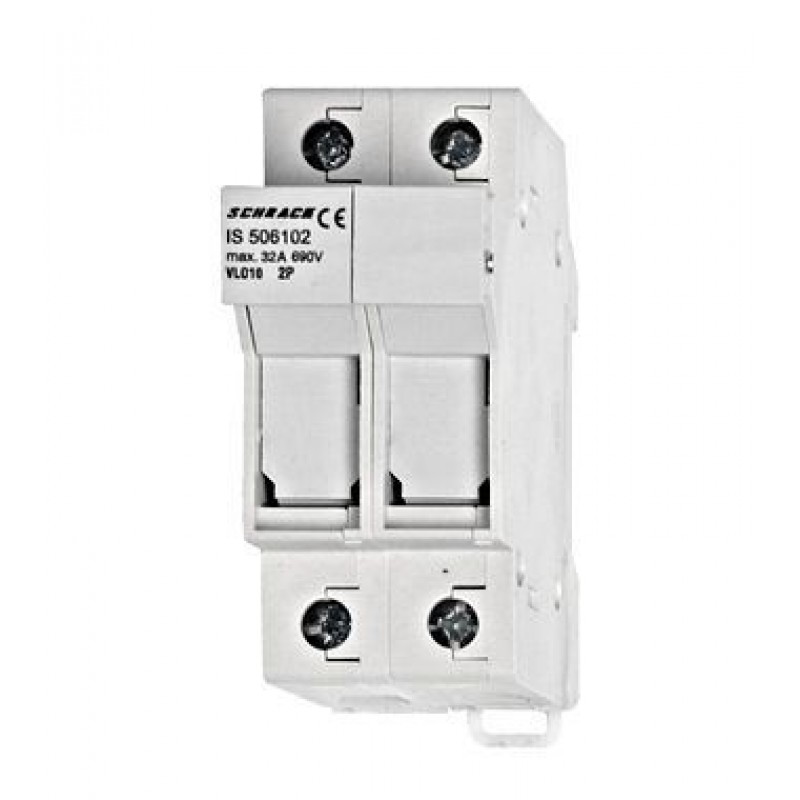

This device is a fuse holder (separator) specially designed for photovoltaic systems, having the role of protecting modules and cables against overcurrents (short circuit or overload).
Here is the detailed description of its features:
Main Technical Features
- Number of Poles: 2P (protects both the positive and negative branches of the panel string).
- Rated operating voltage: 1000V DC (direct current). It is the standard voltage for most residential inverters.
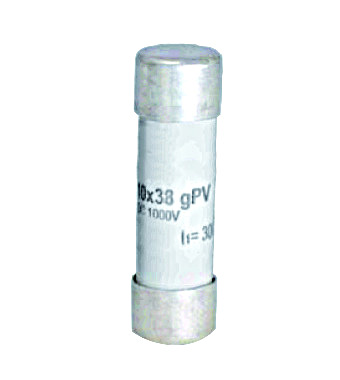
- Compatible fuse format: Uses cylindrical type ceramic fuse sockets, standard size 10×38 mm.
- Maximum rated current: It usually lasts up to 32A (the protection current value depends on the fuse inserted inside).
Advantages and Construction
- Superior insulation: The housing is made of heat-resistant, self-extinguishing plastic materials that resist the electric arc specific to direct current.
- Safe handling: Allows manual disconnection of the circuit for maintenance by flipping the drawer where the fuses are located.
- Installation: Fastens on DIN rail of 35 mm in the painting.
- Indicator (optional): Many models in this range (such as those from Schrack or ETI) come equipped with an LED that lights up when the fuse is blown.
Role in Photovoltaic System
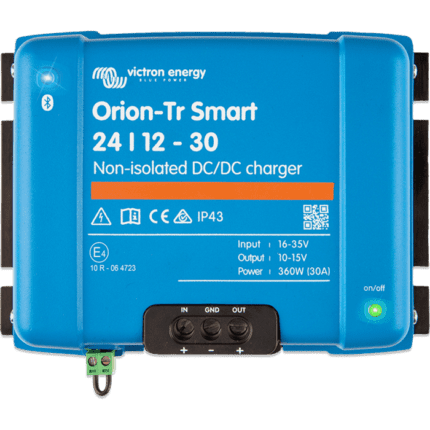
The separator is mounted between the solar panels and the surge arrester (SPD). It intervenes if a fault current occurs (for example, a discharge or a short circuit on a string), by melting the fusible wire inside the ceramic cartridge, thus isolating the faulty part from the rest of the installation.
Attention: This device usually ships without ceramic fuses included. You have to buy separately the fuses according to the amperage of your panels (ex: 10A, 15A, 20A).












Reviews
Clear filtersThere are no reviews yet.