

Modern industry faces a double challenge: volatile energy costs și pressure to reduce carbon emissions. In this context, innovative energy storage and management solutions are no longer a luxury, but a strategic necessity.
One of the most promising options is The modular containerized Energy Hub – a compact, ready-to-use unit that combines photovoltaic production, advanced storage and digital control of energy flows.
🌍 Imagine the future
A 10,000 m² factory powered entirely by an energy hub located right in the yard. No grid dependency, no unpredictable bills and a carbon footprint reduced by up to 70%. It's not a sci-fi scenario, but a reality that companies can implement today.
Fundamental components for industrial performance
The role of energy in industrial efficiency
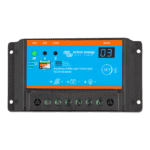
- 6× Victron Energy Quattro 15000 Inverters
Total power of 90 kVA, configured redundantly. This architecture ensures operational continuity even in critical scenarios, providing maximum resiliency for industrial workloads. - 1× Fronius Tauro inverter
Robust industrial inverter, optimized for high efficiency and operation at extreme temperatures. With active cooling and seamless integration into AC-coupled systems, it is the backbone of photovoltaic conversion. - Storage system EcoSolaris – LiFePO₄ – 240 kWp
EcoSolaris accumulators Lithium Iron Phosphate (LiFePO₄) offers the highest standard of safety and longevity, with up to 8,000 charge/discharge cycles and high thermal stability. Stored energy is available for consumption peaks, backup or grid participation. - Integrated ventilation and monitoring
The container is equipped with active ventilation systems and temperature/humidity sensors, which keep the equipment in optimal parameters. This infrastructure ensures reliability and protects the long-term investment.
Efficiency and intelligent digitization
The Energy Hub doesn't just produce and store energy – it works as one smart ecosystem. Victron GX and Fronius Solar.web platforms constantly monitor consumption and production, optimizing flows so that losses are minimal.
Basically, the system "learns" the company's consumption pattern and automatically decides: when to store, when to deliver and when to interact with the network. The result is high energy efficiency and tangible resource savings from the first year of operation.
Safety and continuity guaranteed
Reliability is key to the industrial environment. The configuration with 6× Quattro 15000 in parallel provides full redundancy: if one unit stops, the others instantly take over the load.
LiFePO₄ batteries add further protection through their chemical stability, eliminating risks of overheating and ensuring thousands of cycles without significant degradation.
The integrated monitoring system ensures total transparency: operators can see critical parameters in real time and receive alerts before a situation becomes problematic.
Cost reduction and competitive advantage
Beyond sustainability, the most immediate benefit is financial:
- Energy operational costs can be reduced by 40–60%, depending on the consumption profile. [#$$#]
- The amortization of the investment is realized in 5–7 years, while the lifetime of the system exceeds 15 years.
- The system allows peak shaving și load shifting – reducing load peaks and redistributing consumption – which lowers monthly bills and stabilizes operations.
- By participating in programs of demand response, the hub can even generate additional income, turning energy from a fixed cost into a strategic asset.
Practical applications in industry
The modular Energy Hub is versatile and can be implemented in multiple scenarios:
- factories and production lines with high consumption,
- logistics parks and distribution centers,
- large construction sites and temporary infrastructures,
- agricultural and agro-industrial holdings.
Wherever there are high energy needs, but also cost and emission reduction objectives, such a hub finds its place.
Conclusion
The global energy transition is no longer a concept of the future, but an ongoing reality. Modular energy hubs demonstrate how industries can turn their consumption into a competitive advantage, ensuring independence, reducing costs and contributing to sustainability.
The future looks extremely promising: from next-generation batteries and energy management based on artificial intelligence, to solar parks capable of powering entire continents. Solar technology and smart storage solutions are not just efficiency tools, but fundamental pillars of the emerging green economy.
What we are seeing now in industrial Energy Hubs is just the beginning. The next stage will mean solid-state batteries, artificial intelligence integrated into energy management and solar parks capable of providing up to 80% of the continents' energy needs. A highly promising future where solar technology and smart storage will become the backbone of the global economy.